War - What Is It Good For?

Depending on whom you listen to, America is either badly losing the war in Iran (The Strait of Hormuz! The price of oil! Our standing in the world!) — or Iran is the big loser (Their leadership decimated! Their navy virtually destroyed! Their missile capabilities crippled!).
What gets lost is the fact that in many (perhaps most) wars, both sides are losers. Wars entail destruction. In a justified war, the price paid is worth it — not fighting the war would have resulted in greater devastation. But even conflicts with unequivocal victors (such as World War II) are lose/lose when you step back and look at the incredible death and destruction even the “winner” has endured.
So while different media spheres seem to trumpet opposite positions, in reality they are just focusing on different aspects of the same thing. In meaningful ways, both sides are losing. We have been taught to believe that wars are either won or lost, but the sad truth is that some wars just go on and on. Israel/Palestine is one modern example, but anyone remember the Hundred Years War, which actually lasted for 116 years? In that war, the French eventually won. But many other wars result in a stalemate (North and South Korea). In recent years, decisive victories have been hard to come by — mostly because we weren’t actually fighting to win (Afghanistan being the most recent and perhaps saddest example). That is why it was so important for the U.S. to go into this “operation” with clear goals and a strategy for achieving victory. All the available evidence indicates we did not.
If the end result of all this is that the Islamic Republic remains in power with a vastly reduced military capability, maybe the conflict will not have been a total loss. It will be a tragic lost opportunity, but perhaps we will be better off than if we had simply done nothing. However, if Iran is able to retain control over the Strait of Hormuz, instituting a “tollbooth” system that essentially holds the world’s energy market hostage, then the entire endeavor will have been a colossal waste of resources and lives — a true lose/lose scenario for both sides and for the world as a whole.
On a more positive note, I don’t think we’re likely to end up in a “forever war” as some people fear. Trump has done such a poor job of articulating the reasons for what he’s doing that I don’t think the American public would tolerate it. His approval ratings are already at an all-time low and with midterm elections coming up, he certainly has incentives to end this “military operation” sooner rather than later.
There remains a lot of uncertainty in how this will all play out. With Trump sending more troops to the Middle East, it is still possible that we could achieve something resembling real victory. But does Trump even know what it would look like? The recent two week ceasefire and Trump’s seeming willingness to negotiate on a 10- point peace plan strongly indicate that he does not.
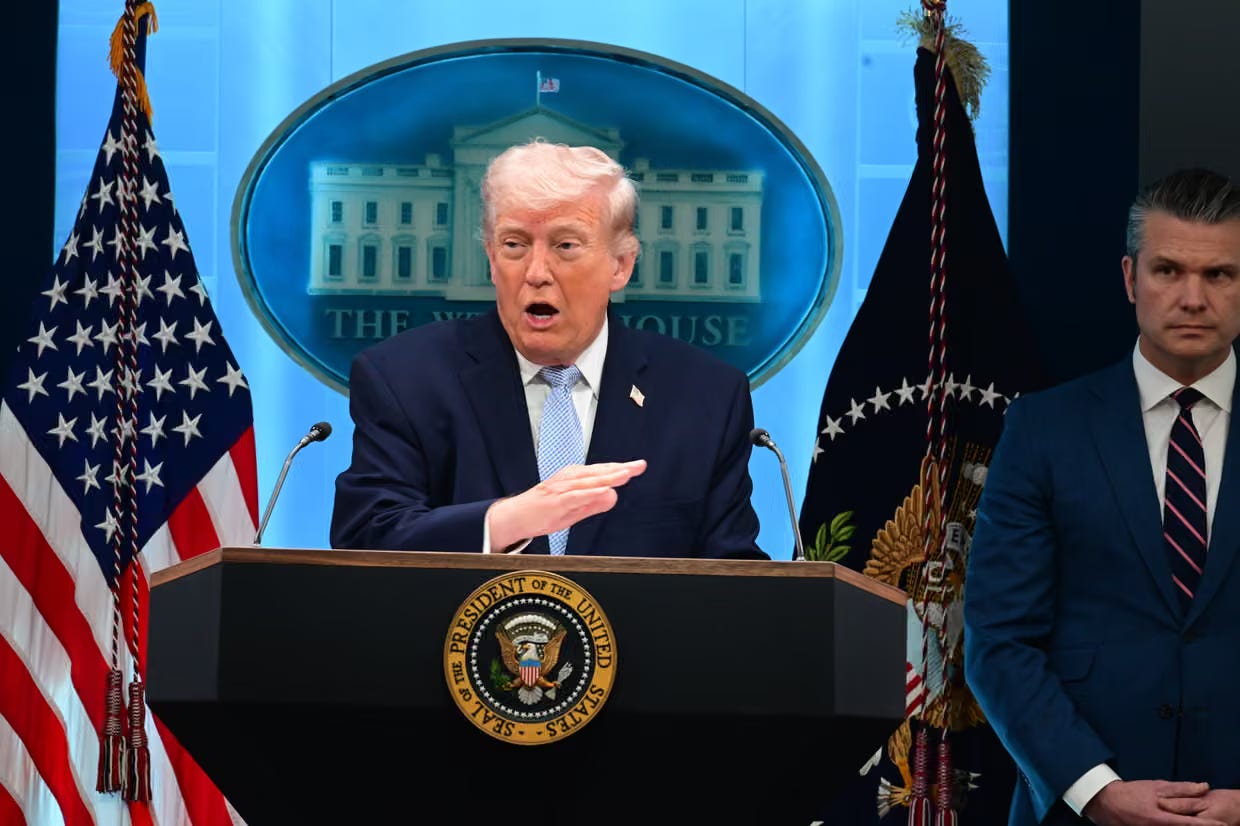
Donald Trump said he had received a ‘workable’ ceasefire proposal with Iran’s 10-point plan. Photograph: Kyle Mazza/NurPhoto/Shutterstock
As I’ve said before, I think it was a mistake for Trump to go into this “excursion” in the way that he did. But now that we’re in it, we need to win it. The regime in Iran is evil and IS a threat to America and to the West. Complete victory (meaning, regime change) would go a long way towards reshaping the Middle East in a positive direction. Unfortunately, that seems increasingly unlikely. One way or another, we should know a lot more in the next few weeks.
It exists to end evil threats to,the lives of individuals from their tyranny and aggression against others.
Regime change doesn’t address the cultural mania regarding reliance on an imaginary deity for guidance. This barrier needs to fall in all nations for reality to rule and peace to prevail.